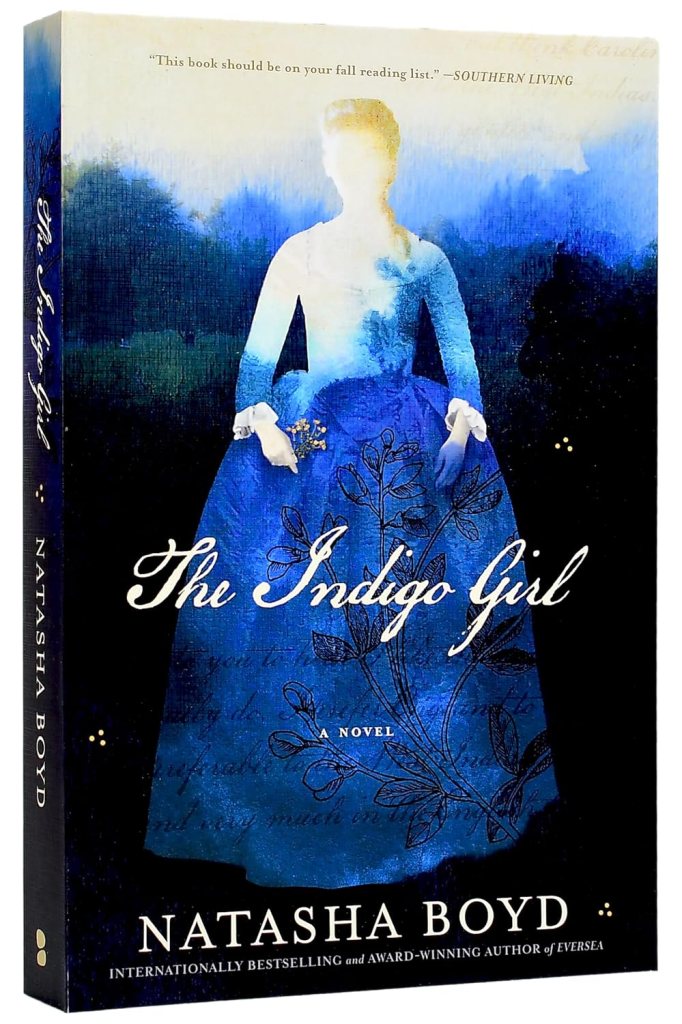
I am entering a new century in my travels through American history, landing in 1739-1744 colonial South Carolina. Here, I meet another strong female protagonist, Eliza Lucas, in The Indigo Girl by Natasha Boyd. This historical fiction book, based on actual historical documents and Eliza’s own letters, tells the tale of a remarkable, little-known woman in American history.
When the story begins, Eliza is sixteen years old and finds herself in charge of her family’s three plantations in rural South Carolina, as her father pursues his own military ambitions. The colonists in South Carolina find themselves caught in the tension between the British and the Spanish, who control Florida. Eliza soon discovers that her father has mortgaged the family’s land to secure his commission in the British Army, and she is in danger of losing everything.
When Eliza learns how much the French pay for indigo dye, she believes this is the answer to saving her family’s plantations. However, everyone tells her it is impossible, and no one will share the secret of how to make this precious dye. Eliza’s undertaking is interfered with at every turn, even by her own family. Her only allies are an aging horticulturalist, a lawyer and family friend, and slaves, whom she makes a dangerous promise to: teach her the age-old process of making indigo dye, and in return, she will teach the slaves to read.
This true story is full of dangerous and forbidden friendships, ambition, betrayal, love, political peril, financial threats, and selfless sacrifice. Eliza Lucas is a remarkable, determined young woman whose actions were years ahead of her time.
In my research after reading this story, I learned that during this period, indigo dye became one of South Carolina’s largest exports, laying the foundation for the incredible wealth of several Southern families who still live on today. Eliza Lucas’s overlooked accomplishments in producing indigo helped influence the course of United States history. When she passed away in 1793, President George Washington served as a pallbearer at her funeral.
 Joan's Reading Adventures
Leave a comment