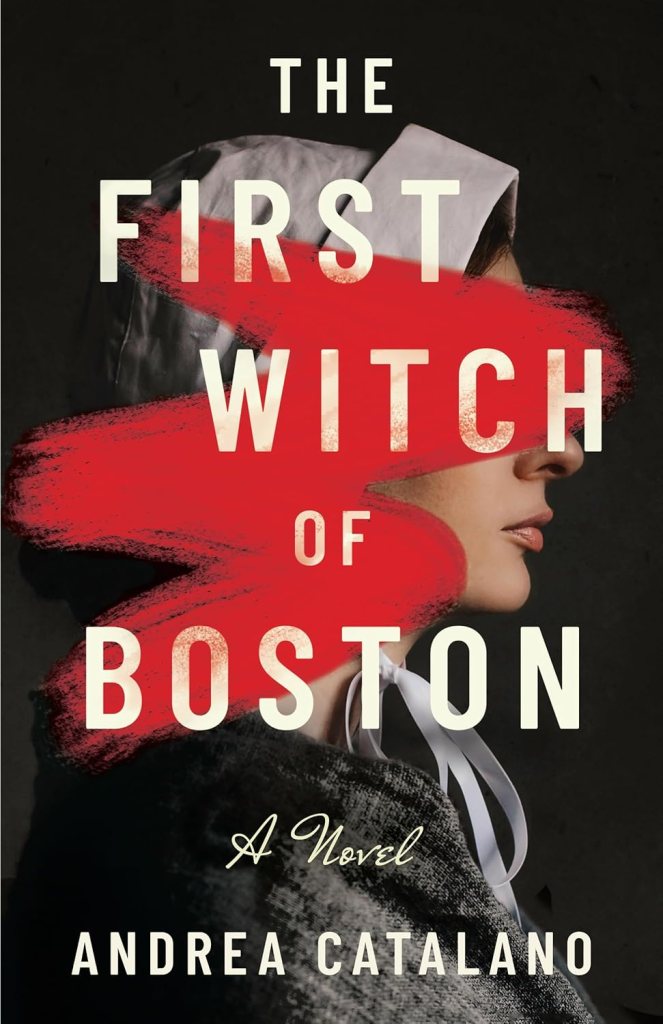
My heart breaks finishing the prologue of The First Witch of Boston by Andrea Catalano. My mind knows the sad story of the women of this place and time accused of witchcraft, and I know the painful fate of many of these unfortunate victims. But to hear Margaret’s husband Thomas share the sad truth of continuing his life after his wife is hanged for the crime of not being a woman in the image of the Puritans in this place, is heart wrenching.
Told in two parts and perspectives, Catalano’s story gives insight into both Margaret and her husband, Thomas, and their lives from Old England to New England. The first part is told through Thomas Jones’s perspective. He shares details of their new life in the Massachusetts Colony and his marriage to Margaret prior to their arrest based on accusations of witchcraft.
Part two switches to Margaret’s voice after her arrest, imprisonment, and trial for the charges of witchcraft and being possessed by the devil. Through both parts of this book, the love Thomas and Margaret share is evident and enchanting, a love many long for. Despite their devotion to each other, we discover that both Thomas and Margaret hide secrets from their past; secrets that they fear will end their marriage.
Learning about life during this early part of the new world, before this colony became part of the United States of America, shows the dangers of power and fear working against people who are different from us or hold different customs and beliefs. The closed-mindedness of the judgmental Puritans from this colony took the lives of many innocent women because they did not understand these women and let fear cloud their judgment. Men ruling over women remains a common theme throughout history as it is in the novel.
After finishing this novel, I found myself needing to know more. The First Witch of Boston takes place in 1646 with the execution of Margaret Jones. In my research, I discovered some alarming facts: around 35 people from all the colonies faced execution during the 17th century. The famous Salem Witch Trials occurred between 1692 and 1693, 46 years after Margaret’s death. Women were the primary targets. In this short period of time, 200 individuals were accused of witchcraft, 30 were convicted, and 19 were executed by hanging- 14 women and five men. Several of the convicted died in prison.
National Geographic has a very informative article posted below that will reveal how fear and power worked together to allow the execution of innocent people in our country and going back to the 15th century European witch hunts.
 Joan's Reading Adventures
Leave a comment